Report
What is a weekly nutritional analysis?
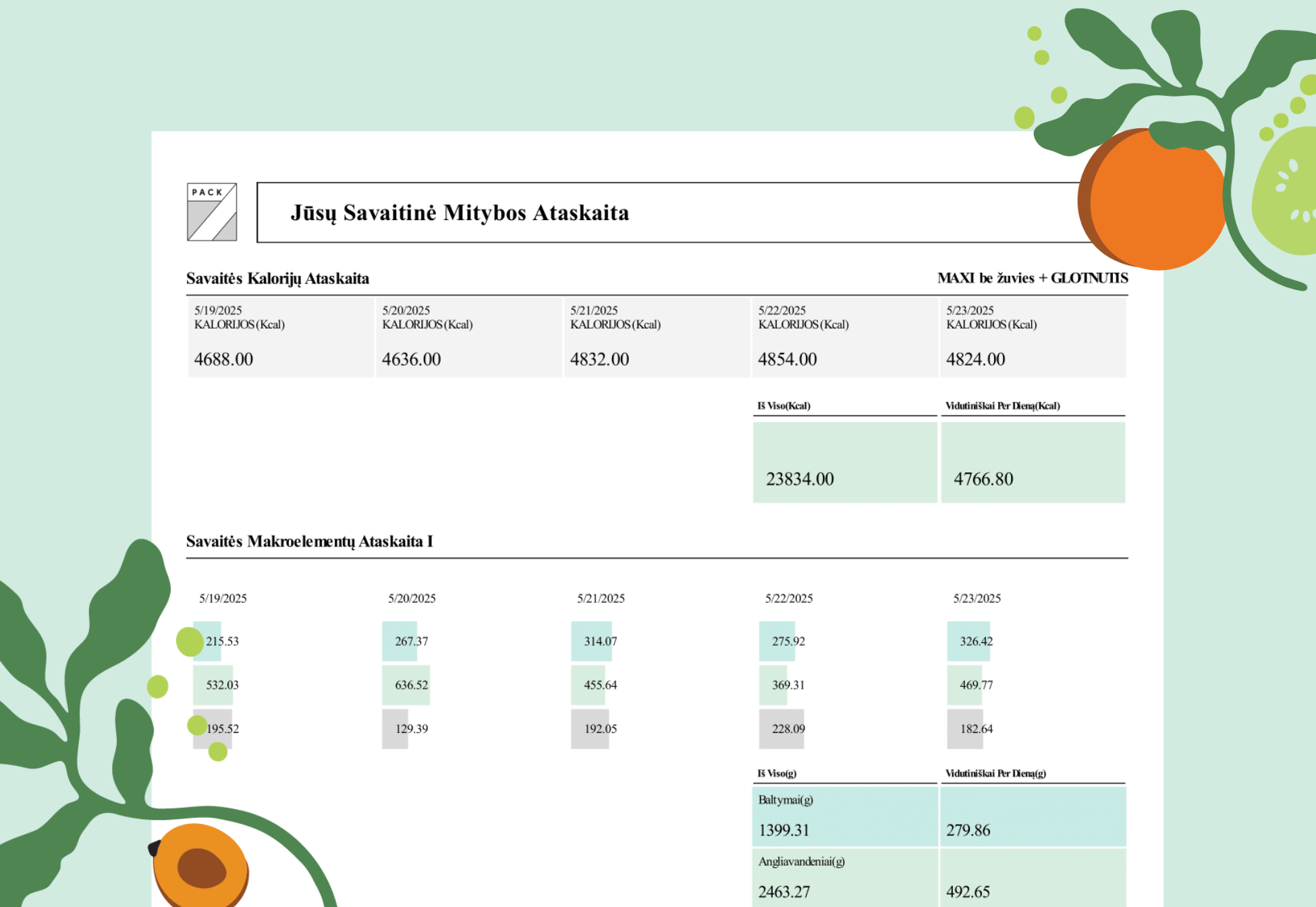
Weekly Nutrition Report is a unique dietary habits tracking and analysis tool created exclusively for GI kitchen customers. It helps you understand what your diet looked like over the last five days (the number of days depends on the period of the ordered diet plan).
Report structure
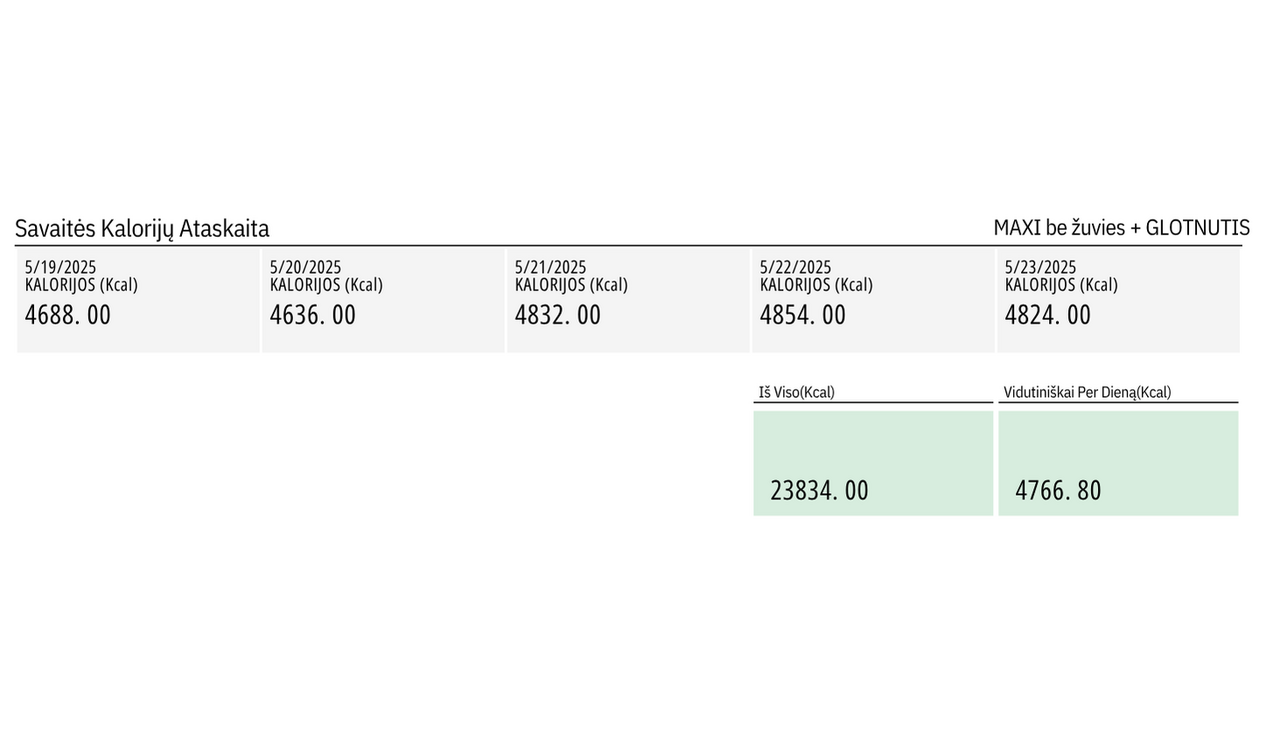
Calorie contentHere are the key components that make up a weekly nutrition report. This includes a nutrient analysis, calorie summary, and personalized recommendations.
This section details your total calorie intake and compares it to the recommended daily calorie intake.
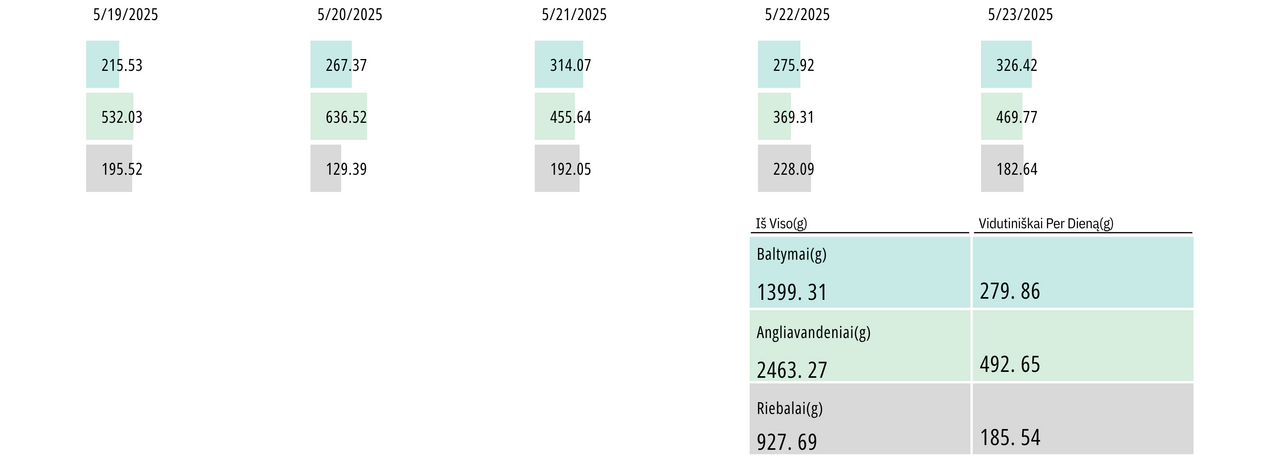
Macronutrients
This section provides detailed information on the key macronutrients: protein, carbohydrates, and fat. It explains how your diet meets the recommended intake and how this affects your energy levels and overall well-being.
It also provides tips on how to balance your intake of these nutrients for optimal results.
Vitamins and microelements
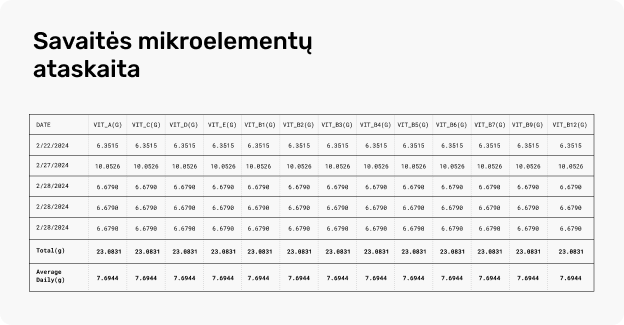
Detailed information is provided on how much of each vitamin and micronutrient was received per day and how much is produced per week. The average amount received is compared with the World Health Organization (WHO) recommended daily rate.
Clicking on each vitamin/micronutrient icon will take you to another page where detailed information about it is provided.
In the last 2 lines you will see the difference between the vitamins you received that week and the recommended WHO intake.

Key questions
Who is the weekly nutrition report useful for?
The Weekly Nutrition Report is an indispensable tool for anyone who wants to better understand and improve their eating habits. Whether you’re looking to lose weight, gain muscle mass, or simply feel more energetic and healthy, this report will give you the information you need.
How do I order a weekly nutrition report?
The weekly nutrition report is only available to customers who have subscribed to any GI Kitchen nutrition plan. It is sent automatically by email every Friday – no additional action is required. The weekly nutrition report is currently free.
Information about vitamins
A
Vitamin A
Essential for maintaining normal vision, the immune system, reproductive function, and skin health. It also plays an important role in cell growth.
B1
Vitamin B1
Also known as thiamine, it plays a vital role in energy metabolism and is essential for the proper functioning of the nervous system.
B2
Vitamin B2
Also known as riboflavin, it plays a crucial role in energy production, cell function, and maintaining healthy skin and vision.
B9
Vitamin B9
Crucial for DNA synthesis and fetal development. Essential before conception and during pregnancy to prevent neural tube defects.
B12
Vitamin B12
Essential for red blood cell production, DNA synthesis, and nerve cell maintenance. Unique because of the mineral cobalt it contains.
C
Vitamin C
Best known for its antioxidant properties and role in strengthening the immune system. Essential for various physiological functions.
D
Vitamin D
The “sunshine vitamin” essential for bone health. It can be synthesized by the body itself when exposed to sunlight.
E
Vitamin E
A powerful antioxidant that protects cells from oxidative damage, supporting immune function and skin elasticity.
Information about micronutrients
Se
Selenium
Essential for various body processes. Human needs selenium in very small amounts, primarily found in soil and water concentration.
Mg
Magnesium
Cofactor for hundreds of enzymes involved in energy production, protein synthesis, and structural functions.
I
Iodine
Key component of thyroid hormones required for normal growth, neurological development, and metabolism.
Fe
Iron
Essential mineral for oxygen transport via hemoglobin and energy production across all cells in the body.
Ca
Calcium
Vital for strong bones and teeth, muscle contraction regulation, nerve impulse transmission, and blood clotting.
P
Phosphorus
Structural component of cell membranes and nucleic acids, involved in bone mineralization and energy production.
K
Potassium
Essential electrolyte for nerve impulse transmission, heart function, and maintaining fluid balance.
Zn
Zinc
Required for immune system function, protein synthesis, cell division, and efficient wound healing.
Do you have any additional questions?
Contact us and our team will help you.